

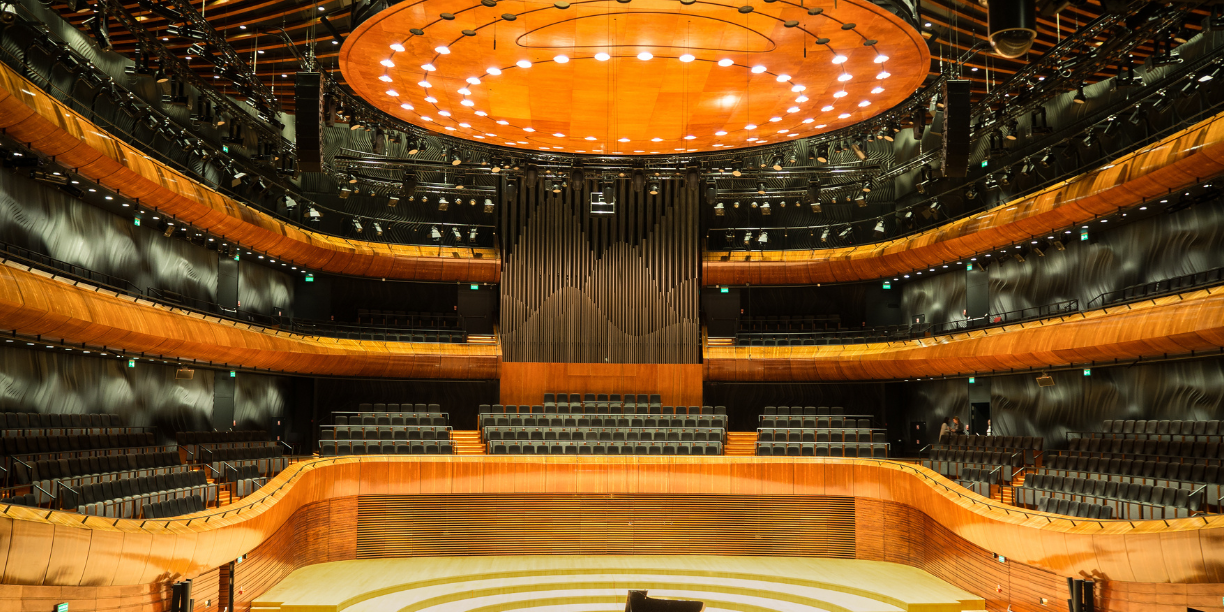
Acoustics might seem intangible, but it plays a critical role in creating comfortable, functional, and impactful spaces. From concert halls to classrooms, understanding and manipulating sound can make all the difference in ensuring spaces meet their intended purpose. Below, we’ll explore the fundamentals of acoustic design, including how sound behaves, how it can be altered, and how effectiveness is measured.
Master the essentials of acoustic design with our comprehensive CE course here!
Understanding Sound and Its Properties
Before exploring acoustic design, it’s important to understand the basics of sound. Sound is a type of energy known as a mechanical wave. It is produced by vibrating objects, which move particles in the surrounding medium—whether air, water, or solid materials. These vibrations create changes in pressure that travel through matter to your ears, where they are interpreted as sound.
Sound has several key properties that must be considered in design:
- Frequency (measured in hertz) determines the pitch of a sound—higher frequencies produce high-pitched sounds, while lower frequencies result in deeper tones.
- Amplitude, or the height of the sound wave, determines the loudness or intensity.
- Wavelength relates to frequency and affects how sound interacts with its environment, such as whether it reflects off surfaces or diffuses into smaller spaces.
These properties work together to create what we perceive as sound, and understanding them is the first step in designing spaces with ideal acoustic conditions.
How Sound Energy Moves Through Matter
Sound cannot exist in a vacuum—it needs a medium, as it relies on the collision of particles to propagate. This gives sound a unique characteristic compared to electromagnetic waves like light, which can travel through empty space.
The medium sound moves through affects its speed and how far it can travel. For instance:
- Air is the most common medium where sound travels at about 343 meters per second in normal conditions.
- Water allows sound to travel faster, as water molecules are more tightly packed.
- Solids, such as walls or floors, can transmit sound even faster than liquids but can also lead to structural noise issues.
Acoustic designers pay close attention to how materials interact with sound to either facilitate or inhibit its transmission, depending on the desired result.
Altering Sound’s Path and Intensity
Sound interacts with its environment in a variety of ways, and acoustic design leverages these interactions. The primary methods of altering sound include reflection, absorption, and diffusion.
1. Reflection
When sound meets a hard, flat surface, it bounces back, creating echoes or reverberation. While echoes can be a nuisance in some environments, such as classrooms or office spaces, in concert halls, controlled reflection enhances sound experience by evenly distributing music or speech. Acoustic panels, ceiling materials, and design geometry are all used strategically to direct or manage these reflections.
2. Absorption
To prevent excessive echo or loudness, materials that absorb sound energy, such as foam, fabric, or specialized acoustic insulation, are used. These materials reduce echoes and dampen noise by converting sound energy into heat within their structure. High-absorption areas are common in libraries or meeting rooms where clarity and quiet are vital.
3. Diffusion
When sound is diffused, it scatters evenly throughout a space rather than being concentrated in a single direction. This is particularly valuable in music venues, where diffusion ensures that audiences experience sound uniformly, no matter where they’re seated.
4. Isolation
Acoustic isolation is essential in reducing unwanted noise transmission between spaces. This involves elements like double walls or floating floors, which minimize vibrations traveling from one room to another, commonly seen in hotels or apartments.
Through these strategies, designers adjust sound’s behavior based on the unique needs of a given space.
Measuring Success in Acoustic Design
Acoustic design relies heavily on objective metrics to ensure results meet expectations. These measurable factors include the following:
- Reverberation Time (RT60): This measures how long it takes for sound to decay by 60 decibels in a space. A range of factors, including room size and surface materials, affects reverberation time. For instance, lecture halls benefit from lower RT60 values for speech clarity, while concert halls thrive with longer decay times that enhance music.
- Noise Reduction Coefficient (NRC): Often used to assess the sound-absorption capabilities of materials, NRC indicates how much sound a material absorbs rather than reflects.
- Speech Transmission Index (STI): This measures how intelligible speech is in a specific environment, making it essential in classrooms, theaters, and other spaces where communication is key.
- Sound Transmission Class (STC): This metric evaluates how effectively a wall, window, or door blocks noise from traveling to adjacent areas. High STC ratings are essential for privacy and noise control.
By quantifying these aspects, acoustic designers ensure their projects achieve the optimal balance of sound qualities.
Closing Thoughts
Acoustic design might often go unnoticed, but its impact is profound. Whether it’s an auditorium that amplifies orchestral crescendos or a home office that shields you from noisy distractions, successful acoustic design transforms sound from a potential nuisance to an enhanced experience. By deeply understanding how sound moves, interacts with its surroundings, and can be measured, acoustic professionals bring their expertise to the spaces where we live, learn, and listen.
For anyone planning architectural projects or interior designs, remember that sound is as much a part of the experience as light, color, or form. Don’t overlook it—it’s fundamental to how we connect with the spaces around us.
Register for the ‘Sound Advice for Acoustics’ course to earn 4 LU/HSW units and learn even more on this topic.